

First Time Playing Golf? - The New Golfer Starter Series Lesson #6
Playing golf for the first time can feel a little intimidating.
What do you wear?
What do you bring?
When should you arrive?
Where do you go?
And what happens when you actually get onto the golf course? The good news is that your first round doesn't need to be complicated. You don't need an amazing golf swing. You don't need expensive equipment. And you definitely don't need to know every rule in golf.
This guide covers the basics you need to feel comfortable turning up and playing your first round.

1. Before You Go. Choose the Right Golf Course
For your first round of golf, look for a course that welcomes beginners.
A shorter public/municipal course, 9-hole course or par-3 course can be a great place to start.
You don't need to begin on a difficult championship golf course.
Your goal for your first round is simple:
Get comfortable being on a golf course and enjoy playing.

2. Book Your Tee Time
Most golf courses use tee times.
Your tee time is simply the time your group is scheduled to start playing.
For example:
Tee time: 10:20am
That doesn't mean arriving at 10:20.
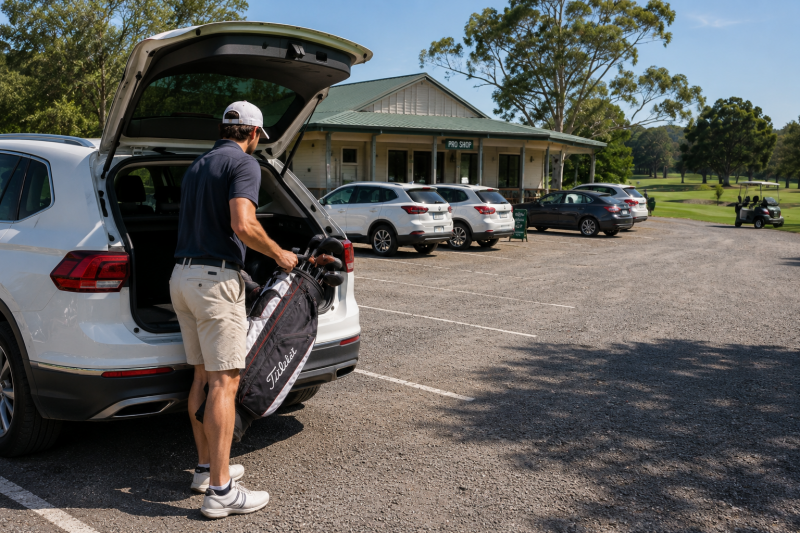
For your first round, try to arrive around 30 minutes early.
This gives you time to:
- Park and find the clubhouse
- Check in
- Pay your green fee if required
- Organize your clubs or hire equipment
- Find the first tee
- Hit a few practice putts
- Relax before you start
Don't make your first golf experience a race from the car park to the first tee. I have done this a few times and it wasn't fun.

3. What Should You Wear?
Golf clothing doesn't need to be complicated.
For most public golf courses, something simple and comfortable will be fine.
Think:
Polo shirt or neat top + shorts/trousers + comfortable shoes
Golf shoes can be useful particularly if its wet, but you usually don't need to buy them before your first round. Comfortable sports shoes may be fine depending on the course.
Some golf clubs have stricter dress rules than others, so check the course's website before you go.

4.What Should You Bring?
You don't need to arrive with a golf shop in your bag.
For your first round, the basics are enough:
- Golf clubs
- Golf balls
- Tees
- Ball marker
- Water
- Hat and sunscreen
- Comfortable clothing
- A glove if you use one
And bring more than one golf ball.
Losing golf balls is completely normal—especially when you're starting.

5. What Happens When You Arrive?
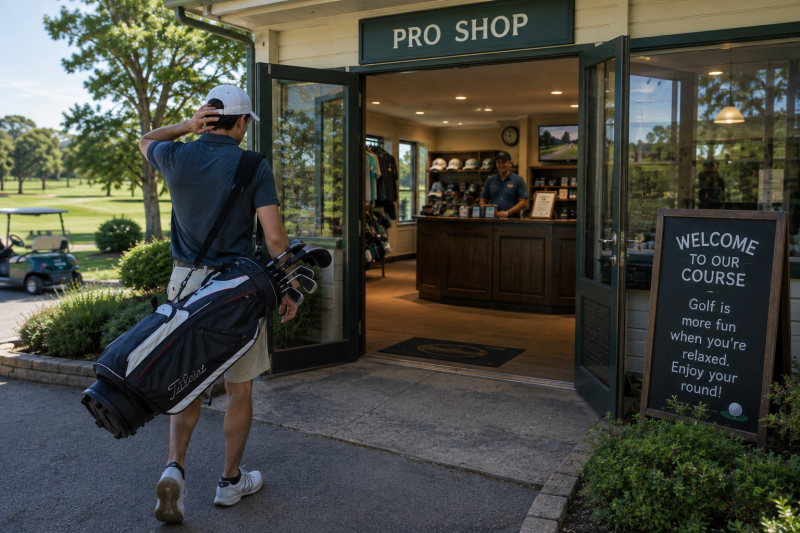
Head to the golf shop, pro shop or clubhouse.
Simply tell the person at the counter:
“I've got a tee time at 10:20.”
If it's your first time playing, there's nothing wrong with saying so. They can tell you where the first tee is and explain anything specific you need to know about the course.
6. Your First Tee
This is the part many new golfers worry about.
Don't.
When it's your turn, put your ball on a tee between the tee markers.
Take a couple of practice swings if you want.
Then hit your shot.
You do not need to smash the ball 250 metres down the middle of the fairway.
Your first goal is simply to get the ball moving in roughly the right direction.
Then you walk or drive to your ball and hit it again.
That's golf.

7. How a Golf Hole Works
Most holes are either a:
Par 3 — shorter hole
Par 4 — medium-length hole
Par 5 — longer hole
You start from the tee.
You keep hitting the ball toward the green.
Once your ball reaches the green, you use your putter to roll the ball into the hole.
Then you move to the next tee and do it again.
A standard round has 18 holes, but playing 9 holes is an excellent option for your first round.

8. Don't Worry About Your Score
You can keep score if you want.
But you don't have to make your first round about your score.
If you're struggling badly on a hole, it's okay in a casual beginner round to pick up your ball and move on with your group.
You are learning how golf works.
There will be plenty of time later to worry about handicaps, pars, bogeys and lowering your score.

9. The Golf Etiquette You Actually Need
Golf has lots of traditions and etiquette, but a new golfer doesn't need to memorize everything.
Start with these basics.
Be Ready
When it's your turn, try to be ready to play.
You don't need to rush.
Just avoid unnecessarily holding everyone up.
Stay Safe
Don't hit if someone ahead of you could be reached by your shot.
If a ball is heading toward another person, golfers traditionally shout:
“FORE!”
Look After the Course
Try not to damage the course unnecessarily.
Replace or repair damage where appropriate and follow any instructions provided by the golf course.
Be Considerate
Try not to talk or make distracting noise while another golfer is hitting.
Keep Moving
One of the biggest things new golfers can learn is that you don't have to play brilliant golf—you just need to keep up reasonably well with the group.
If you're having a nightmare on a hole, picking up your ball is better than spending forever trying to finish it.

10. What If People Are Playing Behind You?
Don't panic just because another group appears behind you.
Keep playing normally and be ready when it's your turn.
If your group is clearly much slower and there is space ahead, experienced golfers may allow the faster group to play through.
If you're unsure what to do, ask one of the golfers you're playing with or course staff before starting.

11. What If You Hit a Terrible Shot?
You probably will.
Everyone does.
You might miss the ball.
You might hit it sideways.
You might lose a ball.
You might take several shots just to reach the green.
That's okay.
The golfers around you are usually far more interested in their own game than yours.

12. The Most Important Rule for Your First Round
Don't try to look like an experienced golfer.
You're not one yet—and that's perfectly fine.
Ask questions.
Watch what the other golfers do.
Keep moving.
Stay safe.
And enjoy actually being on the golf course.
Your first round isn't about proving how good you are.
It's about learning how golf works.

13. Your First-Round Checklist
Before leaving home:
✓ Tee time booked
✓ Course dress requirements checked
✓ Clubs organized
✓ Golf balls and tees packed
✓ Water packed
✓ Sunscreen and hat
✓ Comfortable shoes
✓ Aim to arrive 30 minutes early
And remember:
You don't need to be good at golf to start playing golf.
You just need to start.
I suggest you save this page link as a favorite and you can use this checklist the first time you play.
What's Next?
Now that you know what to expect on your first round, the next step is getting comfortable actually hitting golf balls.
